
Does Herr's Use Seed Oils? Ingredients Breakdown
Quick Answer
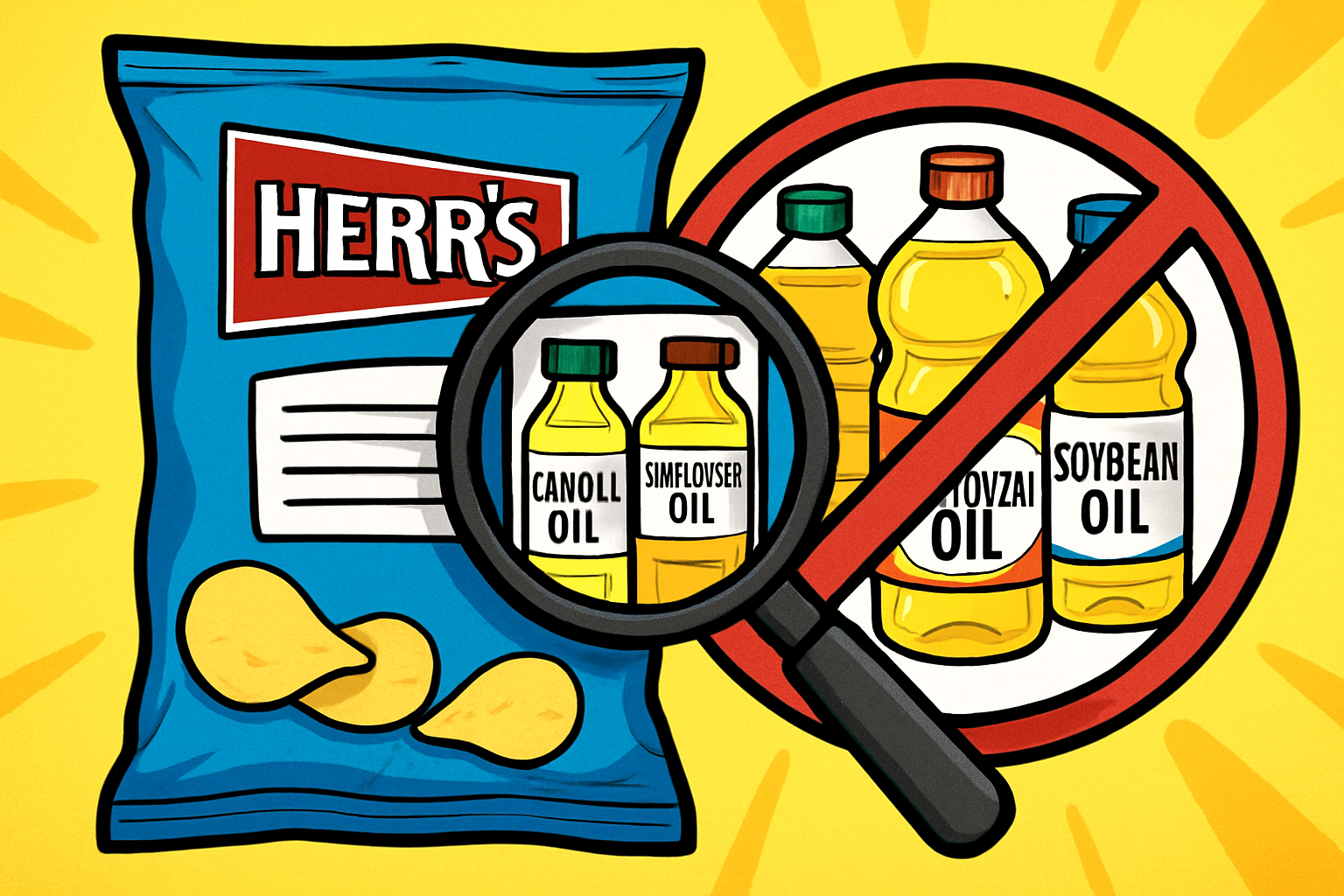
Yes, Herr's potato chips use seed oils. The Pennsylvania-based company lists "vegetable oil" as their cooking fat, which includes corn oil, cottonseed oil, sunflower oil, and canola oil. All of these are high in omega-6 linoleic acid and fall into the seed oil category that many health-conscious consumers are trying to avoid.
🛡️ Trying to avoid seed oils? Seed Oil Scout has you covered.
2M+ downloads. 23K+ five-star reviews. Verified restaurant and grocery data so you always know what you're eating.
If you're looking to minimize seed oil intake, Herr's chips aren't your best option. However, there are several seed oil free alternatives available that use healthier fats like beef tallow, coconut oil, or avocado oil.
What Oils Does Herr's Use?
Herr's uses what they call "vegetable oil" on their ingredient labels, but this generic term encompasses four specific seed oils:
- Corn oil (approximately 60% linoleic acid)
- Cottonseed oil (approximately 54% linoleic acid)
- Sunflower oil (approximately 65% linoleic acid)
- Canola oil (approximately 20% linoleic acid)
The company doesn't specify which oil is used in which products or in what proportions. This blend approach is common in the snack food industry as it allows manufacturers flexibility in sourcing based on cost and availability.
Herr's has been family-owned since 1946 and operates out of Nottingham, Pennsylvania. Despite their long history and regional charm, they've followed the same industrial food path as most major chip manufacturers when it comes to cooking oils.
Why These Oils Are Problematic
These four oils share several concerning characteristics that make them less than ideal for human consumption:
High omega-6 content: All four oils are loaded with linoleic acid, an omega-6 fatty acid. While we need some omega-6s, the modern American diet provides roughly 10-20 times more than our ancestors consumed.
Oxidation prone: Polyunsaturated fats are chemically unstable and prone to lipid peroxidation, especially when heated to high temperatures during frying. This creates harmful compounds that can contribute to inflammation and oxidative stress.
Industrial processing: These oils undergo extensive chemical processing including bleaching, deodorizing, and high-heat treatment that strips away any beneficial compounds and potentially creates trans fats.
Full Ingredients Breakdown
A typical Herr's potato chip contains surprisingly few ingredients, but those ingredients matter. Here's what you'll find in most Herr's varieties:
- Potatoes: The base ingredient, generally not problematic
- Vegetable oil: The blend of corn, cottonseed, sunflower, and/or canola oil mentioned above
- Salt: Standard table salt for flavor
Flavored varieties include additional seasonings, but the oil remains consistent across their product line. Some specialty flavors might include dairy ingredients, natural flavors, or spices, but the cooking oil stays the same.
The simplicity is actually refreshing compared to some snack foods loaded with artificial ingredients. The main concern is purely the choice of cooking oil.
Manufacturing Process Impact
Potato chips are cooked at temperatures around 350-375°F, which is hot enough to cause significant oxidation of polyunsaturated fats. The high surface area of sliced potatoes means maximum oil exposure and absorption.
This combination of high heat, long cooking times, and unstable oils creates the perfect storm for lipid peroxidation. The resulting chips contain not just the problematic oils themselves, but also the oxidative byproducts formed during cooking.
Are Herr's Chips Healthy?
From a seed oil perspective, Herr's chips are not ideal. The high concentration of omega-6 fatty acids and oxidized lipids puts them in the "avoid" category for anyone trying to reduce their seed oil intake.
However, context matters. If you're eating Herr's chips occasionally as part of an otherwise clean diet rich in omega-3s from fish and minimal processed foods, the impact is different than if they're a daily snack.
Some considerations:
Portion size matters: A small bag contains roughly 2-3 grams of oil, while a large bag might have 10+ grams of these problematic fats.
Frequency matters: Daily consumption creates a different risk profile than occasional indulgence.
Diet context matters: If the rest of your diet is anti-inflammatory with plenty of omega-3s, occasional seed oil exposure is less concerning.
The reality is that 99% of potato chips on the market are cooked in seed oils, so Herr's isn't uniquely problematic. They're just following standard industry practice that happens to be metabolically problematic.
Seed Oil Free Chip Alternatives
Fortunately, several companies now make potato chips using healthier cooking fats:
Beef Tallow Options
Boulder Canyon Kettle Chips (Tallow): Available at Costco, these are cooked in beef tallow and represent the gold standard for traditional chip cooking. Beef tallow is highly stable and was the traditional frying fat before the seed oil switch.
Coconut Oil Options
Jackson's Honest: Uses coconut oil for cooking, which is highly saturated and stable at high temperatures. Available at many grocery stores and online.
Avocado Oil Options
Siete: Primarily known for grain-free products, they make chips cooked in avocado oil. While avocado oil is higher in monounsaturated fats, it's more stable than seed oils.
Good Health: Offers several varieties cooked in avocado oil, widely available in grocery stores.
Making Your Own
For ultimate control, consider making potato chips at home using beef tallow, coconut oil, or ghee. Slice potatoes thin, fry at 350°F until golden, and salt to taste. You'll know exactly what oil was used and can avoid the industrial processing entirely.
The Bottom Line
Herr's potato chips use a blend of seed oils that include corn, cottonseed, sunflower, and canola oil. While the company has a charming family history and regional appeal, their cooking oil choices follow the same problematic industry standards as major national brands.
For those avoiding seed oils, Herr's chips should be consumed rarely, if at all. The high omega-6 content and oxidized lipids formed during high-heat cooking make them a poor choice for regular snacking.
Better options exist using more stable fats like beef tallow, coconut oil, or avocado oil. These alternatives prove that delicious potato chips don't require seed oils.
Want to find restaurants that share your commitment to avoiding seed oils? Seed Oil Scout helps you find seed oil free restaurants AND scan grocery products with our barcode scanner to make shopping decisions easier. For dining out guidance, check out our restaurant avoidance strategies to navigate the food landscape more successfully. 🫡